
Lessons from Implementation:
How Families Become Our Best Advocates
By the KIPPNYC Teaching & Learning staff
When we first began rolling out the Computational Thinking units in our KIPP NYC elementary pilot schools, we didn't expect computational thinking to make much of a splash with our schools’ families. But it did.
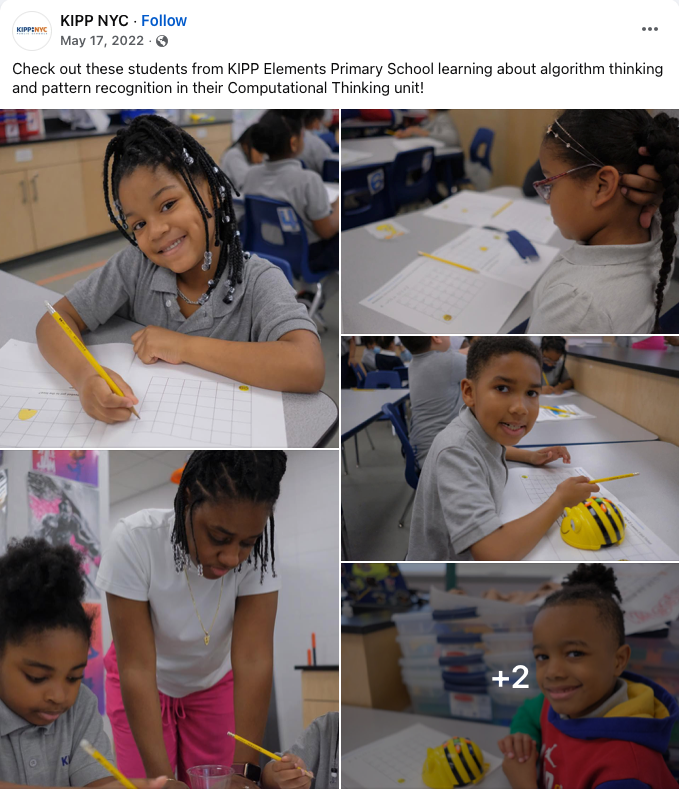
It starts small. A photo posted to a school's Facebook or Instagram page shows a class programming with Bee-Bots, or a short video shows a student explaining the code behind their Scratch game. Parents comment. They tag other parents. A five-second clip of a kid debugging a robot often gets more engagement than almost anything else a school posts, because it’s a Kindergartener doing something we didn’t expect a Kindergartener to be capable of.
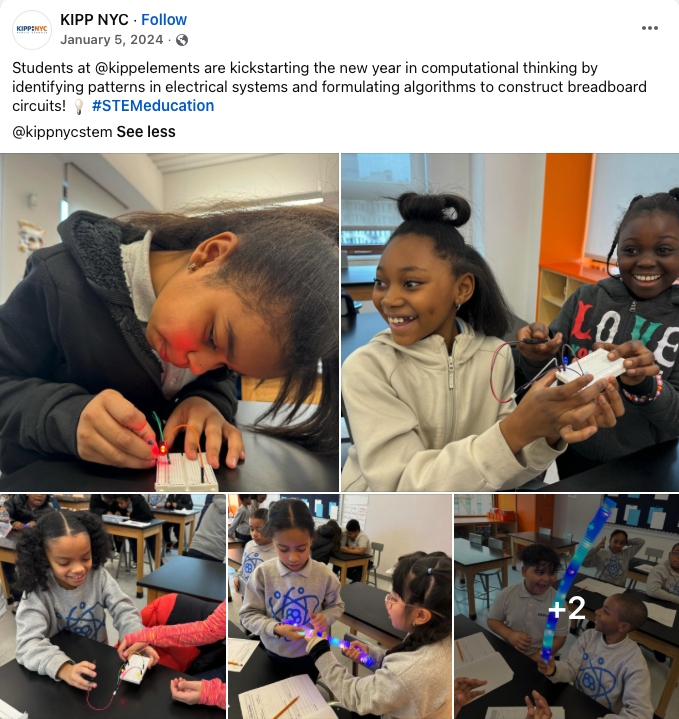
Then there are the projects that come home. A Micro:bit alarm. An LED art project with its own copper tape circuit and switch that a student designed themselves. These aren't worksheets that get shoved in a backpack and forgotten. They're physical objects that sit on a kitchen table or shelf, that parents ask about, that a sibling wants to play with, or that a student can’t wait to get home and explain to anyone who asks. Every one of those projects becomes a conversation starter about what a student is actually learning.
So we went all-in on family engagement. Social media posts, flyers for STEM night and STEM showcases, videos and competitions for at-home projects during COVID. Walking through a gym full of parents watching their children explain circuits and code with real fluency makes the case for CT instruction in a way no permission slip or newsletter can.
And as families started to show up in numbers to these events, word began to spread to schools that hadn’t adopted CT yet, with parents there asking why their kids don't have it too. They started talking to school principals about it. And school principals began asking us when they can pilot the new units.
We didn't plan it this way, it grew out of families noticing what their kids were doing and wanting the same thing for them, and that organic demand became one of the strongest forces behind CT's expansion across our schools and grade levels.
Families don't need to be convinced that STEM matters. They need to see great examples of STEM teaching and learning in their own kid's hands. Once they do, they start asking for more of it.