


4th Grade


UNIT 1: Electrical Systems with the MicroBit
Unit Overview:
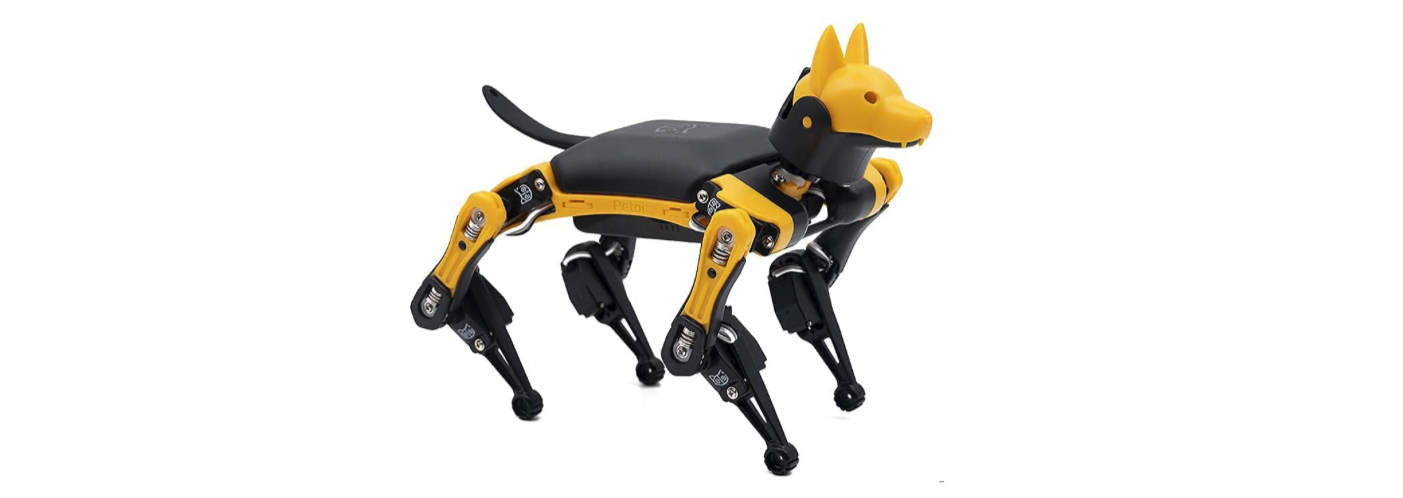
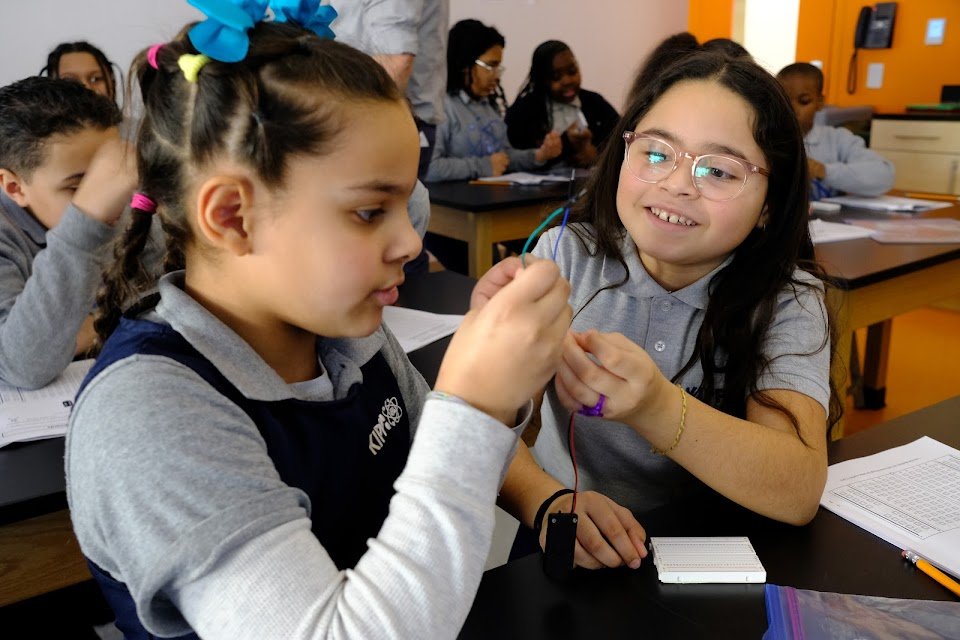
In this unit, students will explore electrical engineering and computer science in more depth. They will work on creating a model of an electrical grid to investigate the blackout. The unit starts with students dismantling simple electronic devices to understand electronic components better. Then they will build basic electric circuits using different materials and components, and create their own conductors and switches. Students will also learn to program a MicroBit chip to enhance their circuits and program working stoplights. Finally, they will apply what they've learned to build a model electrical grid and explore potential reasons for the blackout.
Computational Thinking/CS Standards:
1B-AP-10, 1B-AP-11, 1B-AP-12, 1B-AP-15, 1B-CS-01, 1B-CS-01, 1B-CS-03
Next Generation Science Standards:
4-PS3-4, 4-PS3-2, 3-5-ETS1-1, 3-5-ETS1-2, 3-5-ETS1-3
Common Core ELA Standards:
W.4.1, W.4.1.A, W.4.1.B, W.4.1.C, W.4.1.D, SL.4.4, SL.4.3
UNIT 2: Toy Animals with the Microbit
Unit Overview:
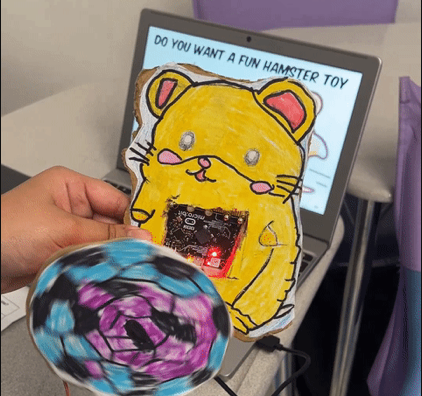
In this unit, students engage in hands-on learning as they create interactive animal toys using sensors to mimic the way real animals respond to external inputs. Throughout the unit, they will utilize their knowledge of programming micro:bit hardware in MakeCode to effectively code input and output devices. In addition to programming, students will work collaboratively to construct a toy bat. As a culminating activity, they will be tasked with the challenge of designing, coding, and engineering an interactive toy animal with sense-based responses, as well as creating a comic book to showcase their creations. It's important to note that this unit is compatible with both micro:bits V1 and V2.
Computational Thinking/CS Standards:
4-6.CT.1, 4-6.CT.2, 4-6.CT.3, 4-6.CT.4, 4-6.CT.5, 4-6.CT.6, 4-6.CT.7, 4-6.CT.8, 4-6.CT.9, 4-6.CT.10
Next Generation Science Standards:
4-LS1-1, 4-PS4-2, 3-5-ETS1-1, 3-5-ETS1-2, 3-5-ETS1-3
Common Core ELA Standards:
RI.4.1, RI.4.3, RI.4.7, RI.4.10, W.4.2, W.2.C, W.4.2.D, W.4.3, W.4.4, W.4.7, W.4.7, W.4.9, W.4.10, SL4.1, SL4.1B, SL4.1D, L.4.4, L.4.6
UNIT 3: Scratch Animation: Telling the Universe Who We Are
Unit Overview:
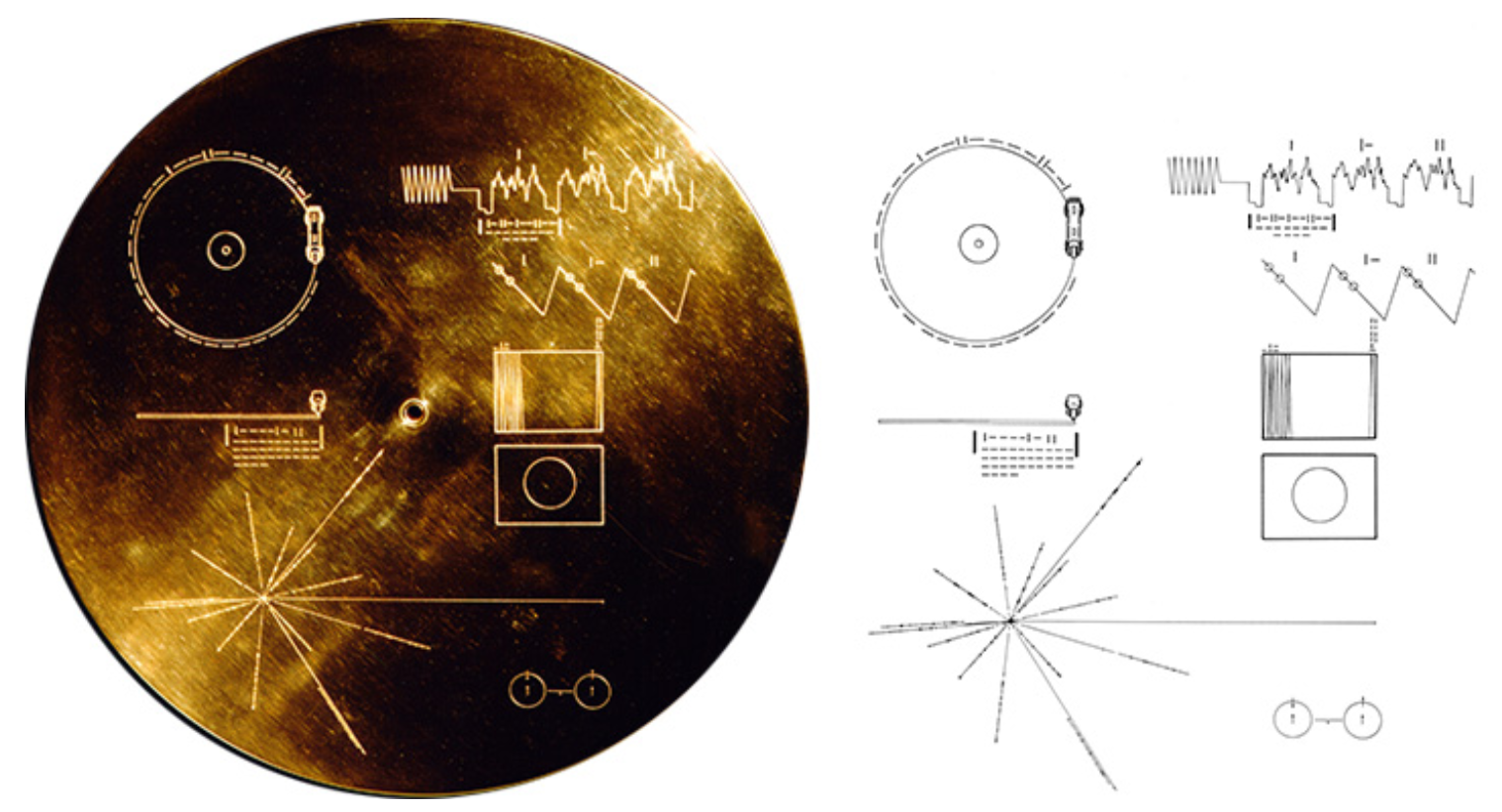
The Voyager space probe was launched by the nations of the world, to go beyond our solar system and into the universe. It was decided that on board, it would carry a circular disc, made of gold, with information about the people of Earth, and even encoded sound of many languages being spoken. We don’t know who may find this message some day, but we wanted them to know something important: who we are.
In this unit, students will build up familiarity with the foundational elements of Scratch programming (events, control statements, loops, coordinates, broadcasting, resetting, parallelism, and sprite object orientation; see glossary below) to prepare them for the final project: code a project to explain to the universe who you are. The unit culminates with a final student showcase where students will present and share what they have built in Scratch to bring aboard the Voyager.
Pairs well with:
Amplify Science Energy Conversions Unit
OpenSciEd 4.2 Energy Transfer: Electricity Unit
Pairs well with:
Amplify Science Vision & Light Unit, Waves, Energy, and Information Unit
OpenSciEd Unit 4.4 Structure & Function, Unit 4.2 Energy Transfer: Electricity
Computational Thinking/CS Standards:
1B-AP-10, 1B-AP-11, 1B-AP-15, 1B-AP-16, 1B-AP-17, 1B-IC-21, 1B-NI-05
Next Generation Science Standards:
3-5-ETS1-1, 3-5-ETS1-2, 3-5-ETS1-3
Pairs well with:
Amplify Science Patterns of Earth and Sky Unit
OpenSciEd 5.4 Sun, Moon, & Star Patterns Unit
UNIT 4: Scratch Video Game Design
Unit Overview: (It is recommended that either the Scratch Animation or the Scratch Space Junk Clean Up! Unit is completed prior, so that students already have a familiarity with programming in Scratch)
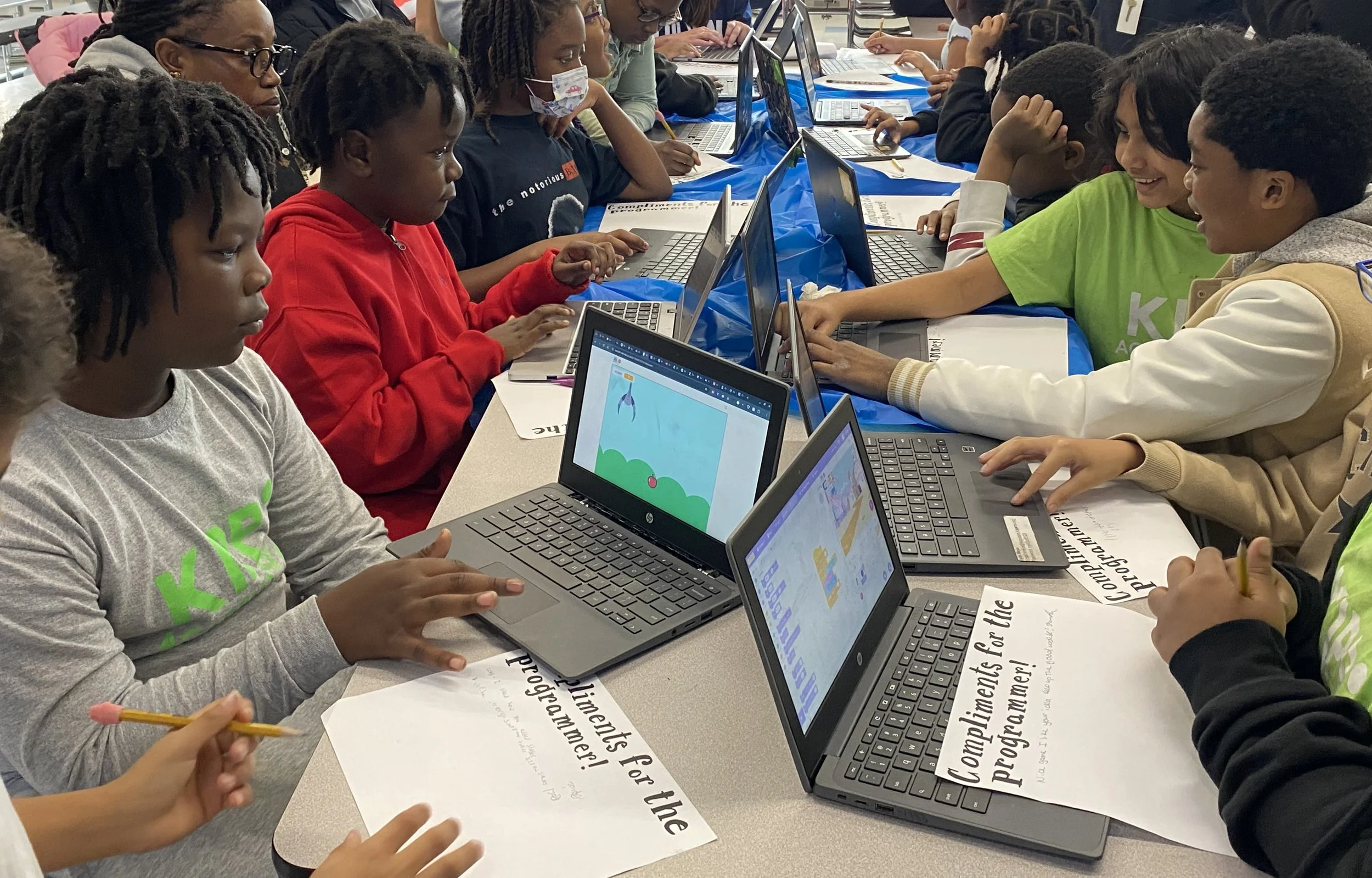
In this unit, students learn Scratch to create an interactive video game and make a controller. They explore look, motion, and control blocks, create an obstacle course, a bouncing ball game, and a sports-themed game. They also design a game related to natural hazards. They then learn about Makey Makey, turning objects into conducting buttons, and design their own controller to pair with their game, connecting software and hardware. Students leverage all of the skills they have learned in computational thinking to design, engineer, and present their final projects.
Computational Thinking/CS Standards:
1B-AP-08, 1B-AP-09, 1B-AP-10, 1B-AP-11, 1B-AP-12, 1B-AP-13, 1B-AP-15, 1B-AP-16, 1B-AP-17, 1B-IC-19, 1B-IC-20, 1B-IC-21
Next Generation Science Standards:
4-PS3-2, 4-PS3-4, 4-PS4-3, 3-5-ETS1-1, 3-5-ETS1-2, 3-5-ETS1-3
Common Core ELA Standards:
W.3.3, W.3.3.A, W.3.3.C
Pairs well with:
Amplify Science Waves, Energy, and Information Unit, Energy Conversions Unit
OpenSciEd 4.2 Energy Transfer: Electricity Unit