


5th - 8th Grade
5th - 8th Grade Computational Thinking Units


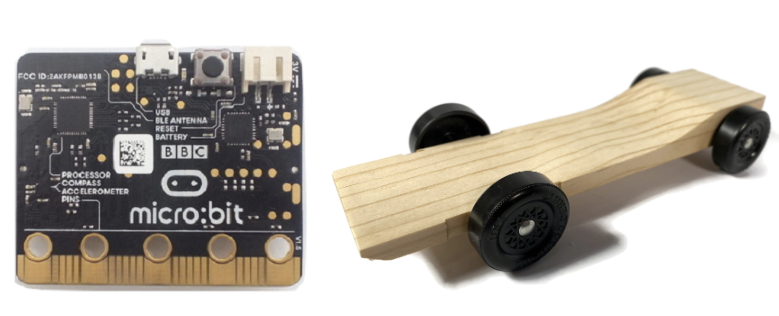

5th Grade: Vaccine Insulation with the MicroBit
Unit Overview:
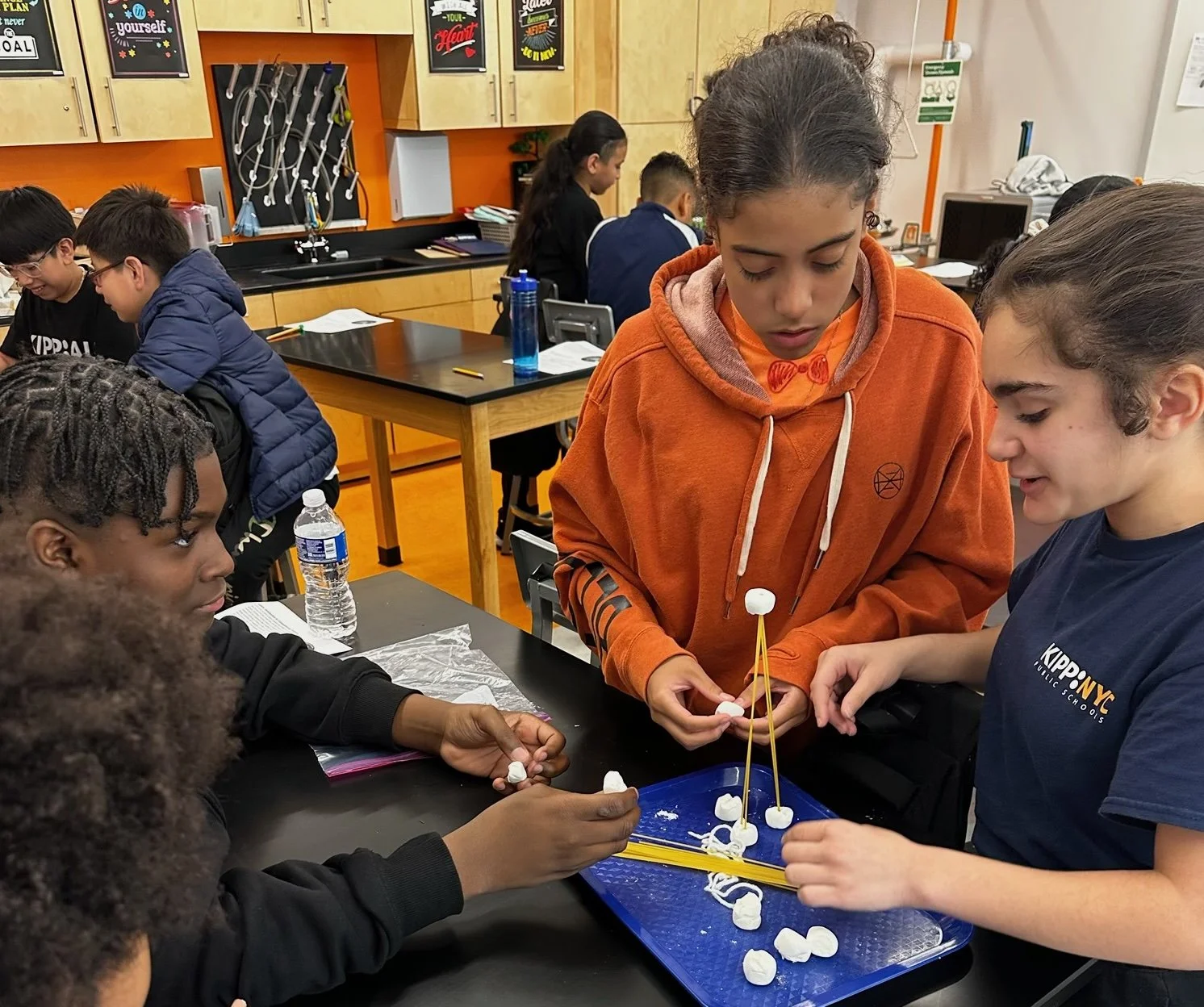
In this unit, students will take on the role of thermal engineers to build a vaccine carrier and warning system that stores and transports vaccines at a given temperature range and alerts supply chain personnel if a vaccine is in danger of spoiling.
To build the insulating portion of their vaccine carrier, students will use common recycled materials to create insulation for their designs, which must keep their vaccine stored in a particular temperature range. Students will iterate to improve their designs by collecting data and meeting with other groups to give and get feedback.
To develop the warning system component of their vaccine carrier, students will use the DS18B20 temperature sensor with microbit to program a warning system for transporters that signals when the vaccine temperature has changed and is no longer safe to use. The warning system will alert users that the vaccine is stored at an ideal, warning, or spoiled temperature. Students will also use the microbit and DS18B20 to test and collect data on the efficacy of their designs.
Computational Thinking/CS Standards:
4-6.DL.2, 4-6.NSD.2, 4-6.NSD.3, 4-6.CT.2, 4-6 .CT.3, 4-6.CT.4, 4-6.CT.8, 4-6.CT.10
Next Generation Science Standards:
5-PS1-3, 3-5-ETS1-1, 3-5-ETS1-2, 3-5-ETS1-3
Common Core Math Standards:
5.MD.A.1, 5.MD.C.3, 5.G.A.2
Common Core ELA Standards:
RI.5.1, RI.5.3
Pairs well with:
Amplify Science Modeling Matter Unit
OpenSciEd 5.2 Matter Properties Unit, 6.2 Thermal Energy Unit
6th Grade: Comfort Decoded - Weather Patterns & Thermal Energy
Unit Overview:
In this unit, students take on the role of experienced engineers to solve a problem at Adventure World theme park. Guests report different comfort experiences despite similar recorded temperatures. Students discover that comfort depends on multiple environmental factors beyond just temperature, including humidity and wind speed.
Students apply computational thinking strategies to break down the complex problem of comfort prediction into measurable factors. They collect environmental data using digital sensors, identify patterns and thresholds where comfort changes, and design automated solutions that respond to changing conditions. By integrating science content about thermal energy transfer with computer science skills, students create evidence-based solutions that demonstrate how energy interacts with matter to affect human comfort.
Computational Thinking/CS Standards:
4-6.CT.1, 4-6 .CT.2, 4-6.CT.3, 4-6.CT.4, 4-6.CS.2
Next Generation Science Standards:
MS-PS3-1, MS-PS3-3, MS-PS3-4
Common Core Math Standards:
6.SP.B.4, 6.SP.B.5, 6.SP.B.5b, 6.SP.B.5c, 6.EE.B.8
Common Core ELA Standards:
RI.6.7, RST.6-8.3, RST.6-8.7, W.6.7, RI.6.1, SL.6.5, SL.6.5
Pairs well with:
Amplify Science Weather Patterns and Thermal Energy Units
Open Sci Ed 6.2 Thermal Energy and 6.3 Weather, Climate, and Water Cycling Units
7th Grade: Force Testing with the Microbit
Computational Thinking/CS Standards:
2-CS-02, 2-CS-03, 2-NI-07, 2-NI-08, 2-NI-09, 2-AP-11, 2-AP-13, 2-AP-15
Next Generation Science Standards:
MS-PS2-1, MS-PS3-1, MS-PS3-2, MS-PS3-5
Common Core Math Standards:
7.EE.3, 7.RP.A.1, 7.RPA.2.b, 7.RP.A.2.c, 7.NS.A.2.c, 7.NA.A.3
Common Core ELA Standards:
RI.2, RI.7
Pairs well with:
Amplify Science Force and Motion, Magnetic Fields Units
Open Sci Ed 8.1 Contact Forces Unit
Unit Overview:
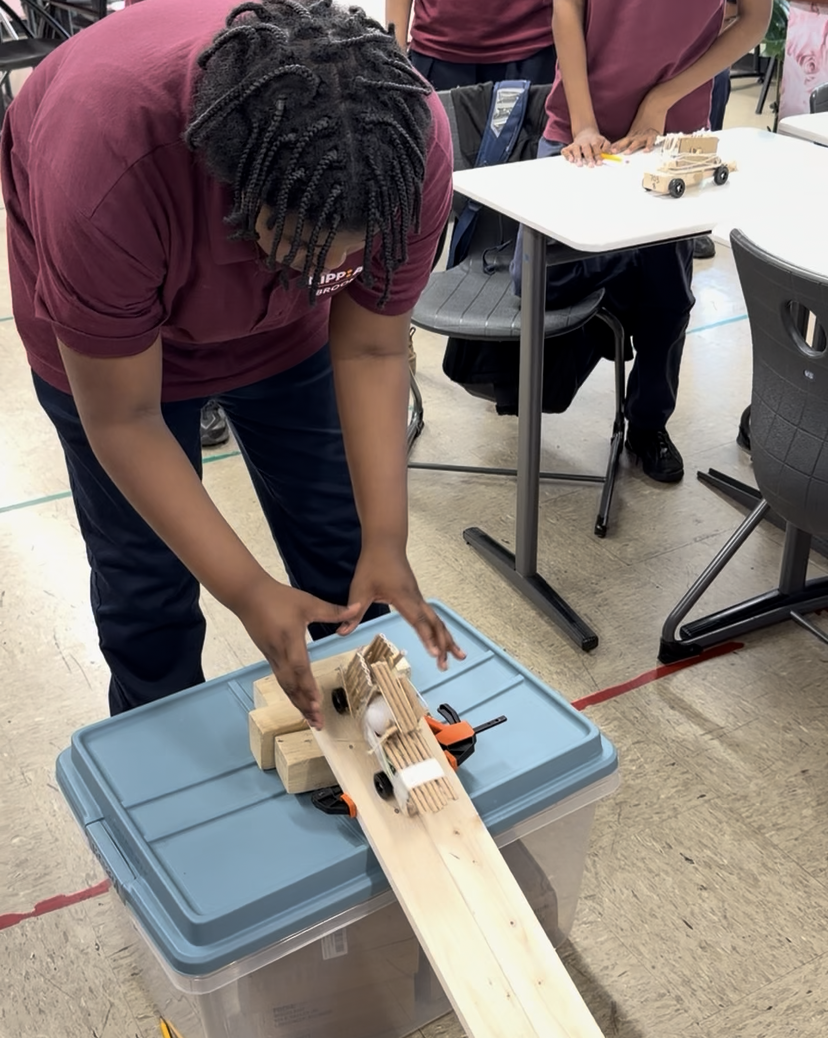
In this unit, students learn how the concepts of kinetic energy and potential energy can be used to better understand the laws of motion as they apply to collisions. Students are tasked with designing a safety system that reduces the force of impact for a “driver” in a car (in this case, an egg riding on a wooden wedge car down a ramp and into a wall). This is especially pertinent as the shift to more electric vehicles on the road means more mass moving at high velocity, and thus higher collision forces.
It introduces students to the equation for kinetic energy and engages students in quantitative calculations that students don’t normally try until high school. The goal is to start to get students comfortable with mathematical modeling in Science, a key feature of a typical high school physics course.
8th Grade: AI for Action with Playlab
Unit Overview:
In this "AI for Action" project based unit, students will explore Artificial Intelligence (AI) and how it impacts folks at the personal, family, and community level. Students will develop AI intuition and fluency by creating and implementing AI solutions for themselves, their families, or communities by designing, testing, and refining AI apps that they create in Playlab, a prompt engineering platform that allows students to create their own educational chatbots.
By the end of the unit, teachers will empower their students with technical AI skills, deeper understanding of AI's impact, and the ability to leverage technology for positive change. Through this comprehensive approach, students develop both the technical skills and ethical awareness needed to become responsible AI creators and advocates of leveraging technology for good.
Computational Thinking/CS Standards:
2-DA-09, 2-AP-10, 2-AP-13, 2-AP-15, 2-AP-16, 2-AP-17, 2-AP-18, 2-IC-20, 2-IC-21
Common Core ELA Standards:
W.8.1, W.8.5, W.8.6